
Teaching Kids About Money: 9 Stunning, Smart Ideas
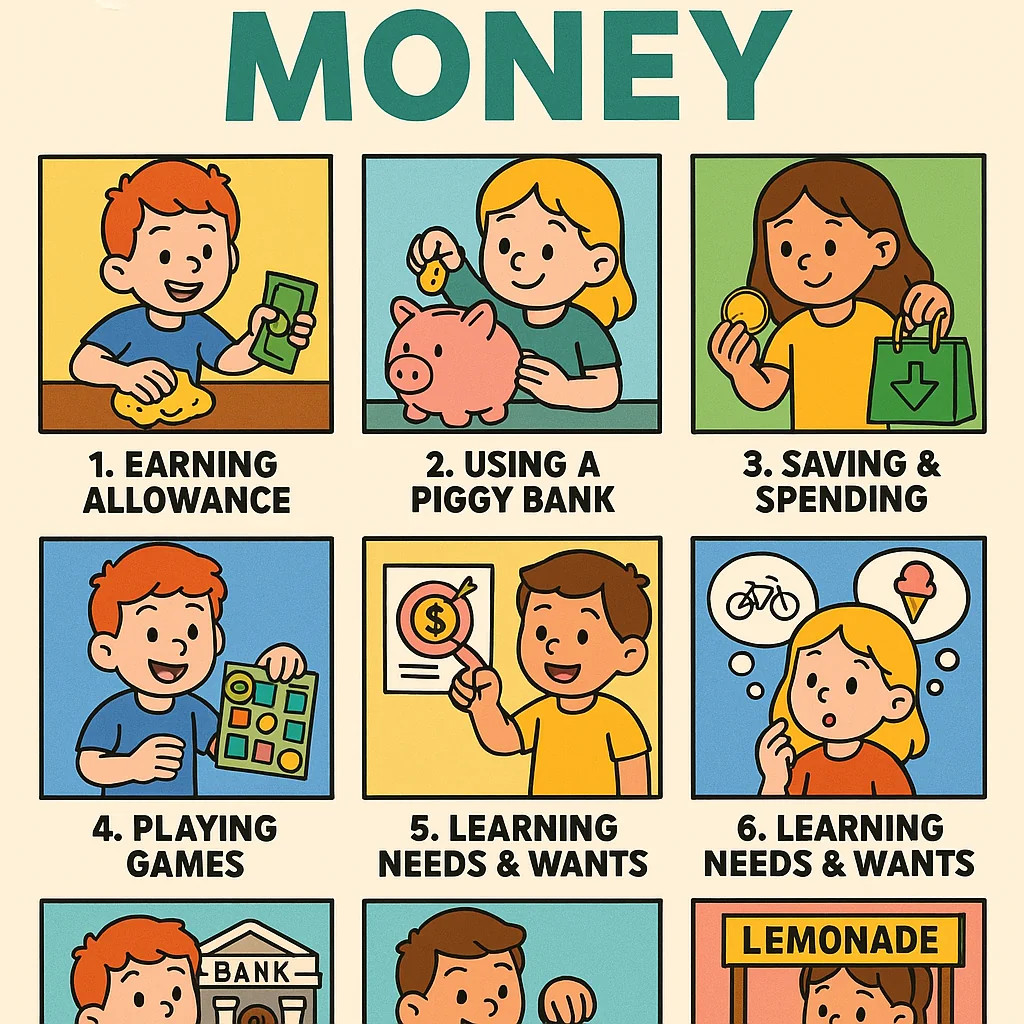

Money lessons start long before a first paycheck. Children watch how adults use, talk about, and react to money, and they build their habits from there. Clear, simple teaching at home can give them skills that last for life.
The good news: kids do not need lectures or complex tools. They learn best through stories, routines, and small real-life choices. Here are nine practical ideas you can use with children of different ages.
Why Teaching Kids About Money Matters
Children who learn basic money skills early tend to feel less stress about finances later. They understand where money comes from, what things cost, and why saving matters. That sense of control can protect them from impulsive choices as teens and adults.
Money lessons also build patience, planning, and self-discipline. A child who waits three weeks to save for a toy is training the same “muscle” they will use one day to save for a car or pay off a loan. These early habits compound just like interest in a savings account.
Age-Appropriate Money Lessons
Different ages understand money in different ways. Very young kids think in simple terms: coins, cash, and “I want this.” Older children and teens can handle digital payments, budgets, and future goals.
Use the guide below to match ideas to your child’s stage of growth.
| Age Range | Main Focus | Simple Example Activity |
|---|---|---|
| 4–6 years | Recognise coins and notes; basic saving | Use a clear jar to save coins for a small toy |
| 7–9 years | Allowance, spending choices, simple goals | Set a weekly allowance and track spending in a notebook |
| 10–12 years | Budgeting, comparison, delayed gratification | Plan a small budget for a party or gift shopping |
| 13–15 years | Income from chores or jobs, digital payments | Manage pocket money on a prepaid card or app |
| 16–18 years | Bank accounts, credit basics, bigger goals | Create a simple monthly budget for transport, food, and fun |
Treat these age ranges as flexible, not fixed. Some eight-year-olds love numbers and “get” budgets fast, while some teenagers need more time with basic saving habits. The key is steady, calm repetition over the years.
9 Practical Ideas for Teaching Kids About Money
You do not have to use all nine ideas at once. Start with one or two that fit your child’s age and your daily routine, then build from there.
1. Use Clear Jars Instead of Piggy Banks
Young children need to see money pile up. A clear jar turns saving into something they can watch and touch, not just imagine. Each coin or note added becomes a small visual reward.
You can even write the goal on a label, such as “Ice cream day” or “Sticker book.” When the jar fills enough to pay for the goal, count the money together. This simple ritual links saving with a clear result, and it feels special instead of dull.
2. Give a Regular Allowance Linked to Learning, Not Punishment
A regular allowance gives kids a safe place to make money mistakes. They learn fast when they blow all their cash on sweets and have nothing left for a toy they wanted. That lesson hurts far less at age eight than at age twenty-eight.
Many families connect allowance with basic responsibilities, but avoid turning every misstep into a fine. If you remove allowance for every slip, you also remove chances to learn. Talk about what allowance is for: practice, planning, and choices.
A simple structure helps children know what to expect and how to plan their actions around money.
- Set a fixed allowance amount and day (for example, every Saturday).
- Agree on what parents will pay for and what the child pays for.
- Split the allowance into spend, save, and share jars or envelopes.
- Review choices at the end of the month in a short, calm talk.
This routine turns allowance into a training tool rather than just extra spending money. The weekly rhythm also teaches them to think in terms of periods, not just today.
3. Separate Money Into “Spend, Save, and Share”
Many parents use a three-part system: money to spend soon, money to save for later, and money to share with others. This frames money as something that helps you, your future self, and people around you.
For younger kids, use three jars. For older ones, use a notebook or app and note how much goes into each category. For example, a child might spend on snacks, save for headphones, and share with a charity box at school.
4. Let Kids Make Real Choices (and Small Mistakes)
Children need space to choose how to use their money. They learn far more from a poor choice they made themselves than from a perfect choice an adult forced on them. The stakes are low with pocket money, so this is the right time to practice.
If your child spends their whole allowance on a game, resist the urge to “rescue” them with extra funds a day later. Instead, talk it through: “You chose the game, so now you cannot buy sweets this week. What will you do differently next week?” That reflection builds judgment.
5. Use Everyday Moments as Mini Money Lessons
Daily life offers constant chances to talk about money in simple terms. These short conversations add up over time and feel natural instead of forced.
Common situations make easy starting points for short, clear lessons.
- At the store: compare prices and unit sizes on two similar products.
- Online shopping: show how taxes, shipping, and fees raise the final price.
- Meal planning: involve kids in choosing recipes to match a set food budget.
- Public transport: explain ticket prices and how passes can save money.
These tiny chats show that money touches daily choices, not just big events. Over time, children begin to look at prices, not just packaging or ads.
6. Introduce Budgeting With a Simple Project
“Budget” can sound heavy, so start with a fun project. Give your child a fixed amount to plan something they care about, then guide them through the trade-offs.
For example, give them a set sum to plan a movie night. They decide how much to spend on tickets, snacks, and transport. If they want more popcorn, they may choose a cheaper drink. This direct link between choices and limits is budget training in disguise.
7. Show How Money Grows Through Saving and Interest
As kids get older, explain that money can work for them, not just be spent. Start simple: if you save and leave money alone, it grows. Use clear numbers and short time frames.
For example, set a “family interest rule”: for every amount a child leaves in savings for a full month, you add a small bonus, like 10%. If they keep 10 in savings, you add 1 at the end of the month. It feels like a game, but it prepares them to understand real bank interest later.
8. Talk Openly About Work, Income, and Digital Money
Many kids see cards and phones tap against machines without seeing cash change hands. Explain that behind every tap is real work and real numbers in a bank account that go up or down.
Share simple facts about your own work, such as “I get paid once a month” or “I save part of each paycheck for emergencies.” As teens grow, show them a bank statement or app and explain key terms like balance, deposit, and payment. This reduces mystery and fear around adult finances.
9. Involve Teens in Real Family Money Decisions
Older children can handle more honest conversations about costs and trade-offs. Without sharing private details, you can invite them into small planning tasks.
Ask a teenager to help compare mobile phone plans, streaming services, or travel options. Show them how you weigh price, quality, and long-term value. If they want a bigger purchase, such as a new console, discuss how much you can contribute and how much they need to earn or save.
Making Money Lessons Stick
Short, regular talks work better than one long lecture. Aim for a few minutes each week where you look at jars, an app, or a notebook together. Ask open questions such as “What are you saving for now?” or “Is there anything you would change about your spending this week?”
The real goal is not to raise a perfect saver. It is to raise a child who feels calm, informed, and in control of money. With clear examples, patient guidance, and plenty of practice, children can build that confidence step by step.