Crypto Mining Rig Guide: Stunning, Affordable Basics
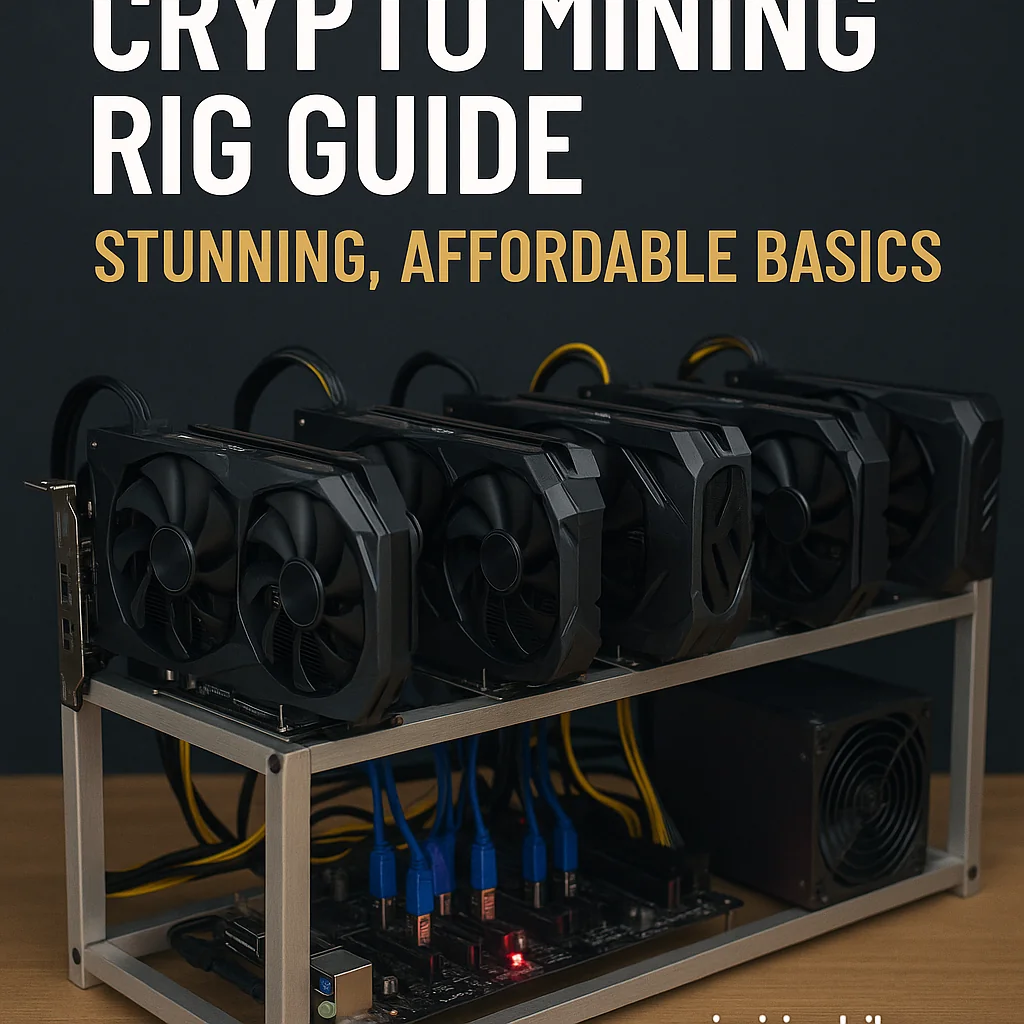

A crypto mining rig is a computer system built to solve mathematical puzzles for a blockchain network. In return, the miner receives new coins and transaction fees. A rig focuses on one job: run mining software as fast and as efficiently as possible.
Some rigs look like stripped-down PCs with open frames and multiple graphics cards. Others are sealed machines that sit on metal racks in large warehouses. The core idea stays the same. A mining rig trades electricity and hardware for a chance to earn cryptocurrency.
How Crypto Mining Works in Simple Terms
Crypto mining secures certain blockchains, such as Bitcoin. Miners group transactions into blocks and compete to find a special number, called a hash, that proves they did the work. This process is known as proof-of-work.
The miner that finds a valid hash first broadcasts the block to the network. If other nodes accept the block, the miner gets a reward. The rig does the heavy lifting by running a large number of hash calculations every second.
Core Components of a Crypto Mining Rig
A mining rig is more than a pile of graphics cards. It is a full system with parts working together for stable 24/7 operation. Each component matters for performance, safety, and long-term cost.
Key hardware parts
Most rigs share a common set of hardware parts, even if they mine different coins. The list below covers the basics you see in both home setups and small mining farms.
- Processing units (GPU, ASIC, or CPU) that perform the hashing work
- Motherboard that connects all components, often with many PCIe slots
- Power supply unit (PSU) or several PSUs to feed the rig safely
- RAM and storage to run the operating system and mining software
- Frame or case that holds parts and allows airflow
- Cooling system such as fans or external ventilation
- Network connection (Ethernet or Wi‑Fi) for pool and node access
Stable rigs keep components balanced. A powerful set of GPUs with a weak power supply or poor cooling is a recipe for shutdowns, throttling, or even damage. Careful planning at the parts level prevents frequent failures later.
Types of mining rigs by hardware
Different coins reward different types of hardware. Bitcoin uses ASICs in practice. Many altcoins still use GPUs. CPUs see limited use today, but they help in some niche cases.
| Rig Type | Main Hardware | Typical Use | Pros | Cons |
|---|---|---|---|---|
| ASIC rig | Application-Specific Integrated Circuit | Bitcoin, Litecoin, and similar coins | Very high hash rate, efficient for one coin family | Single-purpose, higher noise, less flexible |
| GPU rig | Multiple graphics cards | Altcoins (e.g., some ETH forks, Ravencoin) | Flexible, can switch coins, also resellable hardware | Lower efficiency than ASICs, more complex to build |
| CPU rig | High-end processors | A few CPU-friendly coins or test projects | Easy start, uses standard PCs | Usually low profit, power-inefficient for most coins |
Choice of rig type affects nearly everything: power draw, noise, heat, maintenance work, and even how fast your equipment becomes outdated. Many miners start with one GPU rig to learn the basics before scaling up or moving to ASICs.
GPU Rigs vs. ASIC Rigs
Most new miners compare GPU rigs and ASIC rigs. Each model has clear trade-offs that match different budgets, skills, and risk levels.
GPU mining rigs
A GPU mining rig uses several graphics cards joined to a single motherboard. A common small rig holds six to eight GPUs in an open metal frame.
GPU rigs attract hobby miners for a few reasons. Owners can re-use the GPUs for gaming, video editing, or resale. They can also switch coins if a specific algorithm becomes less profitable. On the other hand, GPU rigs require more tuning, such as undervolting and adjusting fan speeds, to stay efficient.
ASIC mining rigs
An ASIC miner is a machine built for one algorithm only, such as SHA-256 for Bitcoin. Internally, it is a set of chips optimized for hashing at high speed with low energy use.
ASICs can reach much higher hash rates than GPU rigs with the same power draw. For large-scale miners, that performance edge matters. The trade-off is lack of flexibility. If a coin changes its algorithm or becomes unprofitable, an ASIC can lose most of its value overnight.
Software That Runs on a Mining Rig
Hardware does nothing without the right software stack. Miners use several tools to control the rig, link to a pool, and monitor results.
- Operating system: Windows, Linux, or specialized mining OS distributions
- Mining software: Programs such as CGMiner, lolMiner, or proprietary ASIC tools
- Pool client or configuration: To connect the rig to a mining pool
- Monitoring tools: Dashboards, phone apps, or scripts to track hash rate and temperature
Most miners use a pool instead of solo mining. A pool combines the hash power of many rigs and pays members based on their share of work. This reduces payout variance and gives a more steady income stream.
Building vs. Buying a Crypto Mining Rig
People often ask if they should build their own rig or buy a pre-built one. Both options can work. The choice comes down to budget, skill, and time.
Steps to build a basic GPU mining rig
Building a GPU rig feels similar to assembling a gaming PC, with more focus on power and airflow. A simple step-by-step plan helps avoid common mistakes.
- Set a clear budget and choose the coin or algorithm you plan to mine.
- Select GPUs based on hash rate, power draw, and price.
- Pick a motherboard with enough PCIe slots for all GPUs plus risers.
- Calculate total power draw and buy one or more high-quality PSUs.
- Assemble the frame, mount the motherboard, and connect CPU, RAM, and storage.
- Install GPUs using PCIe risers, and wire all power cables with care.
- Install the operating system and mining software, then test one GPU at a time.
- Tune settings for hash rate and temperature, and set up remote monitoring.
Building a rig offers more control and often lowers upfront cost. The trade-off is setup time and troubleshooting. New builders sometimes face boot issues, unstable drivers, or overheating until the rig is tuned correctly.
Buying a pre-built rig
Pre-built rigs, especially ASIC miners, arrive ready to connect and start hashing after basic network setup. Some vendors also sell complete GPU frames that include powered risers and tested PSUs.
This saves time and reduces the learning curve. On the other hand, pre-built rigs can cost more and may lock you into a specific configuration. Buyers also need to check warranty terms, support quality, and the reputation of the seller, as shipping damage and used parts are a real risk.
Costs, Profitability, and Break-Even Time
A mining rig is an investment, not a magic coin printer. Profit depends on several moving parts that you can and cannot control.
Key cost factors include hardware price, electricity rate, cooling needs, and pool fees. Revenue depends on hash rate, network difficulty, block rewards, and the market price of the coin. These variables change over time, sometimes sharply.
Many miners use online calculators before they buy a rig. A typical flow looks like this: insert hash rate, power draw, electricity cost per kWh, pool fees, and coin price. The calculator returns an estimate of daily profit and break-even period in days or months. This is only a snapshot, yet it gives a baseline for decision making.
Practical Risks and Downsides
Crypto mining rigs involve real risk. Ignoring these can lead to losses or safety problems. A clear view of downsides helps set realistic expectations.
- Hardware wear: GPUs and fans degrade faster under constant load
- Heat and noise: Rigs can raise room temperatures and sound like a vacuum cleaner
- Regulation and taxes: Some regions limit mining or tax it as income or business activity
- Market risk: Coin prices and difficulty changes can turn profit into loss
- Electric grid stress: Poor wiring or overloaded circuits can be a fire hazard
Simple steps reduce many of these issues. Examples include using dedicated circuits, checking local power rules, setting automatic shutdown at high temperatures, and keeping dust away from fans and heat sinks.
Is a Crypto Mining Rig Right for You?
A mining rig can be a learning project, a side income, or a serious business tool. It suits people who enjoy hardware, accept market swings, and pay close attention to power costs. It does not suit people who want guaranteed returns or who live where electricity is expensive or unstable.
Before you buy or build, run a profit estimate, check your power rate, and think about noise and heat in your home or office. Start small, track real results, and scale only if the numbers and the workload still make sense for you.